
- Unified Command (including roles and responsibilities of schools).
- Roles and responsibilities of fire, law enforcement, and hospitals during an incident involving students/staff (including tribal as well as special needs students).
- Municipal/other support for student/staff evacuations of school buses when no additional school bus drivers are available.
- Hospital Emergency Department surge support needed with an influx of injured students, including special needs students and staff with respiratory issues and severe burns.
- School, hospital, and other communications with parents, patients, and others.
- Coordination of hospitals during a Mass Casualty Incident.
- School reunification and how this is connected to municipal family reception centers.
Objectives:
By the end of the SERF, participants will have a better understanding of:
TARGET AUDIENCE:
- Access/Functional Needs
- Arizona State Associations and Organizations
- Businesses/Commercial Representatives
- Chamber of Commerce
- Communications
- County Emergency Management
- County Public Health
- Dispatch
- EMS
- Fire
- Elected Officials
- Government Officials
- Hospitals/Healthcare Providers
- Law Enforcement
- Legal Advisors
- Mental Health
- Municipal Public Works
- NGOs
- OME
- PIO
- Railroad
- Schools/Educational Institutions
- State and Federal Partners
- Transportation
- Tribal Representatives
- Utilities
- Weather Service

First Scenario:
It is a Saturday afternoon in early September. Ten school districts are traveling by bus to a regional marching band tournament hosted at a large East Valley high school. Five districts are local while the other Five are from outside the valley.
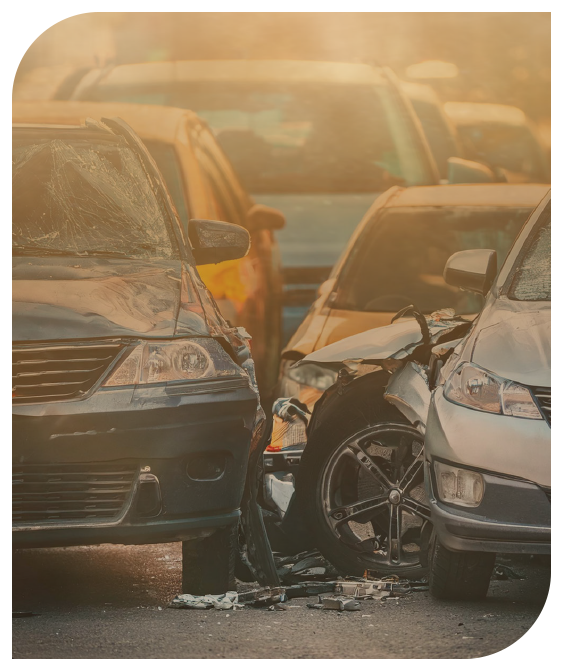
There are 50 school buses with 20 school trucks hauling trailers on route (2,400 band members, color guard, and other students and staff, including students and adults with access and functional needs). Routes planned are SR-60 (15 drivers), Loop 202 (20 drivers), and surface streets through Mesa and Chandler (15 drivers).
The tournament is scheduled for 5:00PM with arrival times of school vehicles at approximately 2:30PM. The National Weather Service forecast for the morning mentioned possible isolated dust storms, but conditions appeared stable at the time of departure.
During transport, a large dust storm approaches rapidly from the southeast. Drivers are reporting sudden and extreme gusts of winds, visibility reductions, and brown skies in the southeast. Communications are abruptly disrupted among the drivers as collisions occur.
Power outages and downed power lines are reported on Loop 202, causing additional traffic collisions at intersections. Emergency response is overwhelmed. Fire, EMS, and law enforcement units are stretched across multiple simultaneous mass-casualty scenes, while hospitals experience rapid Emergency Department surge dominated by pediatric patients. Communications are strained as parents flood schools, hospitals, and 911 centers seeking information. School districts must coordinate student accountability, bus evacuations without available drivers, and reunification planning, while municipalities activate family reception centers and Joint Information Systems. The incident requires Unified Command, regional hospital coordination, public health involvement for respiratory impacts, and sustained multi-agency operations under deteriorating weather conditions.
Initial estimates are more than 200 vehicles impacted with thousands of drivers and passengers, many of whom are students and children.
Second Scenario:
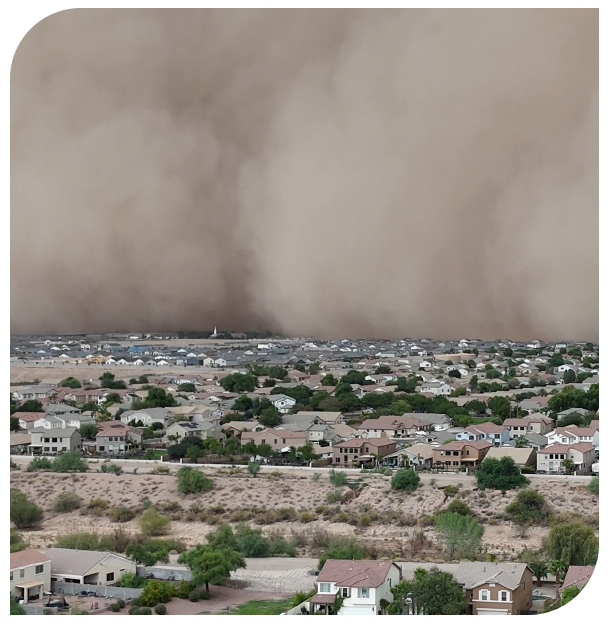
During a late-afternoon monsoon thunderstorm in the Phoenix East Valley, a rapidly advancing haboob develops along the storm’s outflow boundary.
According to National Weather Service the dust wall reaches several thousand feet high and moves at highway speeds, producing near-zero visibility within minutes. Visibility along major corridors in the east valley, including the I-10, Loop 101, and key arterial roadways, drops to less than 50 feet. Strong outflow and microburst winds exceeding 60-70 mph accompany the dust storm, pushing vehicles off roadways, overturning high-profile vehicles, and causing sudden, multi-vehicle pileups.
At the time of impact, school buses are actively transporting students home and to after-school activities across multiple districts, including the Chandler Unified and Kyrene School Districts. More than 210 school buses (including those for special education students) become involved in crashes due to chain-reaction collisions and loss of visibility. One bus is struck broadside and ignites, resulting in burn injuries and smoke inhalation among students and staff. Another bus is forced off the roadway into a nearby canal, partially submerged with students trapped inside. Other buses are disabled in traffic lanes with injured children unable to self-evacuate. Injuries range from minor to severe, including fractures, crush injuries, burns, respiratory distress, and pediatric trauma complicated by special medical and access and functional needs.
Emergency response is immediately overwhelmed. Fire, EMS, and law enforcement units are stretched across multiple simultaneous mass-casualty scenes, while hospitals experience rapid Emergency Department surge dominated by pediatric patients. Air medical transport is grounded due to visibility and wind conditions. Communications are strained as parents flood schools, hospitals, and 911 centers seeking information. School districts must coordinate student accountability, bus evacuations without available drivers, and reunification planning, while municipalities activate family reception centers and Joint Information Systems. The incident requires Unified Command, regional hospital coordination, public health involvement for respiratory impacts, and sustained multi-agency operations under deteriorating weather conditions.
Initial estimates are more than 200 vehicles impacted with thousands of drivers and passengers, many of whom are students and children.
